


The Smart Order Router for Private Markets: The Missing Layer Between Tokenization and Liquidity
The Missing Layer Between Tokenization and Liquidity
For years, the private market conversation has revolved around three words:
Access. Tokenization. Liquidity.
The narrative is simple.
Tokenize the asset.
Place it on a marketplace.
Allow investors to trade.
Liquidity solved.
Except that isn't how markets work.
In fact, public markets learned this lesson decades ago.
Liquidity is not created simply because an asset becomes digital.
Liquidity emerges when buyers and sellers can efficiently find one another.
And when markets become fragmented, something else becomes necessary.
A router.
Not a blockchain.
Not an exchange.
Not even a token.
A router.
The next great infrastructure opportunity in private markets may not be another marketplace.
It may be the technology that connects them all.
The Airport Analogy
Imagine every city in America builds its own airport.
Each airport is modern.
Each airport is beautiful.
Each airport has planes.
Yet none of the airports coordinate with one another.
Passengers arrive.
Flights exist.
Runways exist.
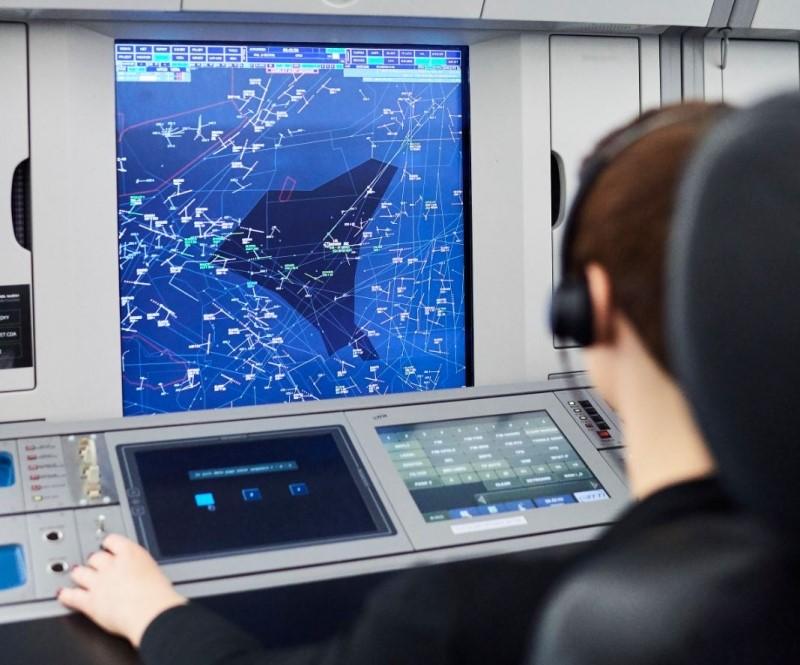
But travel remains inefficient because there is no air traffic control system connecting the network.
This is where private markets are heading.
Today we have:
- Tokenization platforms
- Alternative trading systems
- Broker-dealer networks
- Secondary marketplaces
- Private fund platforms
- Digital security exchanges
Each is becoming its own airport.
The question is no longer whether airports exist.
The question is who becomes air traffic control.
Tokenization Creates Digital Assets
It Does Not Create Liquidity
One of the industry's largest misconceptions is that tokenization and liquidity are synonymous.
They are not.
Tokenization digitizes ownership.
Liquidity connects counterparties.
These are entirely different functions.
A private company share can become a token.
A fund interest can become a token.
A real estate position can become a token.
Yet if no buyer appears, liquidity remains zero.
Tokenization solves representation.
Liquidity solves participation.
The two are related but they are not the same thing.
The Highway System Nobody Is Talking About
Think about the interstate highway system.
Cars do not create transportation efficiency.
Roads do.
A Ferrari sitting in a garage moves nobody.
A thousand Ferraris sitting in a thousand garages still move nobody.
Infrastructure creates mobility.
The same principle applies to markets.
Today:
Marketplace A has buyers.
Marketplace B has sellers.
Marketplace C has inventory.
Marketplace D has demand.
Yet these pools often operate independently.
Liquidity exists.
It simply cannot find itself.
The market needs highways.
Not more parking lots.
Public Markets Solved This Years Ago
When stock trading fragmented across exchanges, public markets developed Smart Order Routing.
A Smart Order Router continuously evaluates multiple destinations and determines where an order should be executed.
Instead of asking:
"Which exchange should I use?"
The system asks:
"Where is the best execution available right now?"
This became a foundational layer of modern market structure.
Investors rarely think about it.
Yet billions of dollars move through routing systems every day.
Without them, fragmentation would severely reduce market efficiency.
Private markets are approaching the same crossroads.
What Happens When Private Markets Fragment?
Consider a future where liquidity exists across:
- Private ATS venues
- Tokenized securities exchanges
- Broker-dealer marketplaces
- Fund secondary platforms
- Institutional networks
- Digital asset ecosystems
An investor wants to sell shares of a high-growth private company.
Where should the order go?
Which venue has the best price?
Which venue has the deepest demand?
Which venue has the fastest settlement?
Which venue satisfies jurisdictional requirements?
The answer may be:
All of them.
Simultaneously.
This is exactly the problem Smart Order Routing was designed to solve.
The Amazon Moment
Many believe the next winner will be the exchange.
History suggests otherwise.
Amazon did not manufacture every product.
Google did not create every website.
Visa did not issue every credit card.
Instead, they became the connective tissue.
The layer through which activity flowed.
The same opportunity may exist in private markets.
The company that wins may not own the assets.
It may own the routing layer.
The Invisible Infrastructure
The most valuable infrastructure is often invisible.
Investors do not think about DNS when browsing the internet.
Consumers do not think about routing protocols when sending emails.
Drivers do not think about traffic-control systems when entering highways.
Yet those systems make everything else possible.
Private markets are beginning to build the visible components:
- Tokenization
- Custody
- Compliance
- Settlement
- Marketplaces
The invisible layer remains largely unbuilt.
Routing.
Discovery.
Distribution.
Connectivity.
The Real Question
The industry often asks:
"When will tokenization create liquidity?"
A better question may be:
"Who will connect liquidity once it arrives?"
Because the future challenge may not be creating marketplaces.
It may be preventing them from becoming isolated islands.
The next decade of private market infrastructure may not be defined by who tokenizes assets.
It may be defined by who builds the bridge between them.
And that bridge may look remarkably familiar.
A Smart Order Router.
Not for public markets.
For private markets.
Related Update