


The Duality of Private Markets: Price vs. Value

Introduction
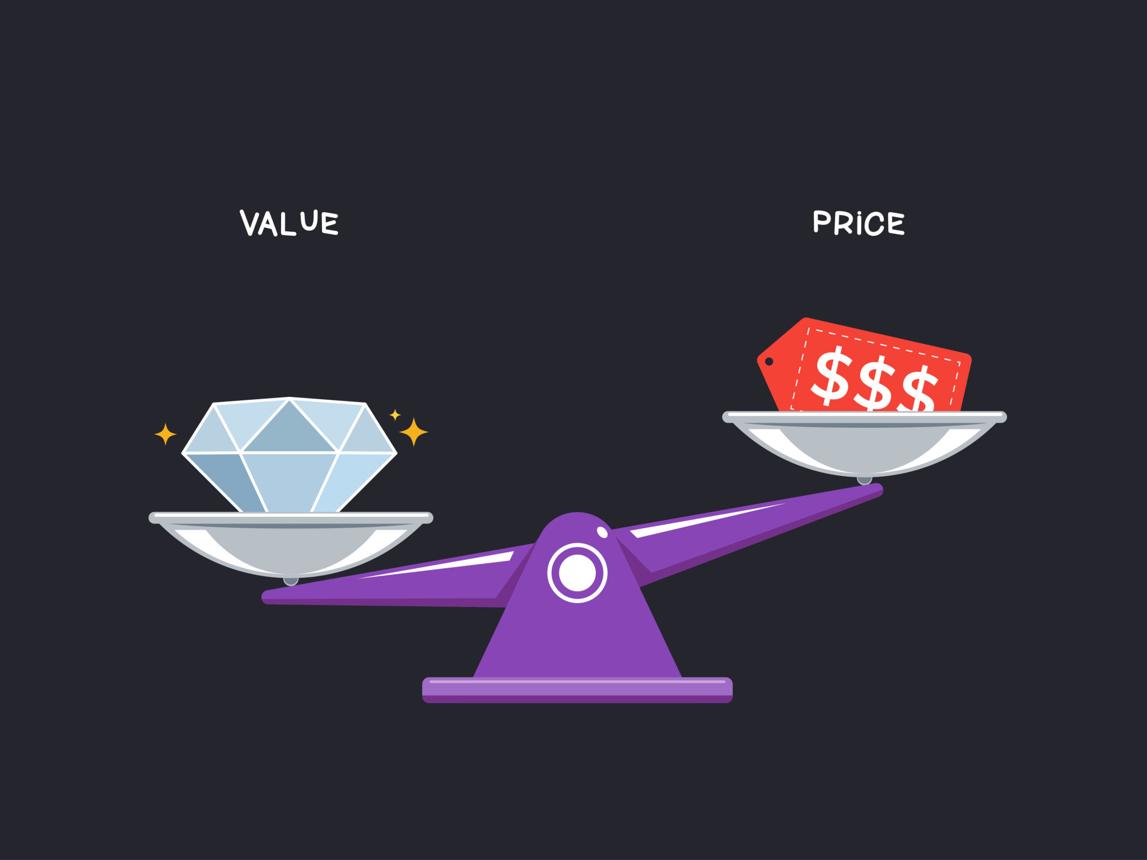
One of the most common mistakes in private markets is confusing a great company with a great investment.
They are not the same.
A remarkable business purchased at an unreasonable valuation can produce disappointing returns.
A misunderstood business purchased with discipline can create exceptional outcomes.
Institutional investing begins by separating price from value.
Great Companies Do Not Automatically Create Great Returns
Every financing round tells two stories.
The first is about the business.
The second is about the investment.
The business asks:
"Can this company succeed?"
The investment asks:
"Am I paying a reasonable price for that success?"
Those are different questions.
Price Is Observable

Price is visible.
Examples include:
- Valuation
- Share price
- SAFE valuation cap
- Preferred share price
Price is what investors pay.
Everyone can see it.
Value Is Estimated

Value requires judgment.
It reflects:
- Cash flow potential
- Competitive advantage
- Governance quality
- Management execution
- Market opportunity
- Capital efficiency
Value cannot be downloaded.
It must be analyzed.
Margin of Safety Still Matters
Benjamin Graham's principle remains relevant.
The future is uncertain.
Therefore:
The greater the uncertainty...
The greater the margin of safety should be.
Private markets are no exception.
Venture Capital vs. Institutional Capital
Many venture investors ask:
Could this become enormous?
Institutional investors ask:
What protects us if it doesn't?
Both questions matter.
The second often determines long-term success.
Price Without Governance
HIGH VALUATION

↓

Higher Expectations

↓

Greater Execution Risk

↓

Reduced Margin of Safety

↓

Lower Risk-Adjusted Returns
Governance helps bridge the gap between price and value.
What Institutional Investors Actually Buy
Institutional investors do not simply purchase companies.
They purchase:
- Ownership rights
- Governance protections
- Capital allocation discipline
- Information rights
- Long-term optionality
Price is only one component of the investment.
AI Doesn't Change Valuation Discipline

Artificial intelligence may improve:
- Research
- Due diligence
- Forecasting
- Risk analysis
It does not eliminate valuation discipline.
Technology changes tools.
It does not change investing principles.
Final Thought
Markets reward innovation.
But they also reward discipline.
A great company can still become a poor investment if expectations exceed reality.
Institutional investing begins by asking not whether the company is exceptional—but whether the ownership being offered justifies the price being paid.
"Price is what the market asks. Value is what disciplined investors determine."
About the Author
Jonathan Simmons is Founder and CEO of Apex Tech Growth Partners, where he focuses on growth-stage technology investments, private market infrastructure, liquidity solutions, and the future of capital markets. His writing explores the intersection of innovation, ownership, distribution, and market structure.
Related Update